
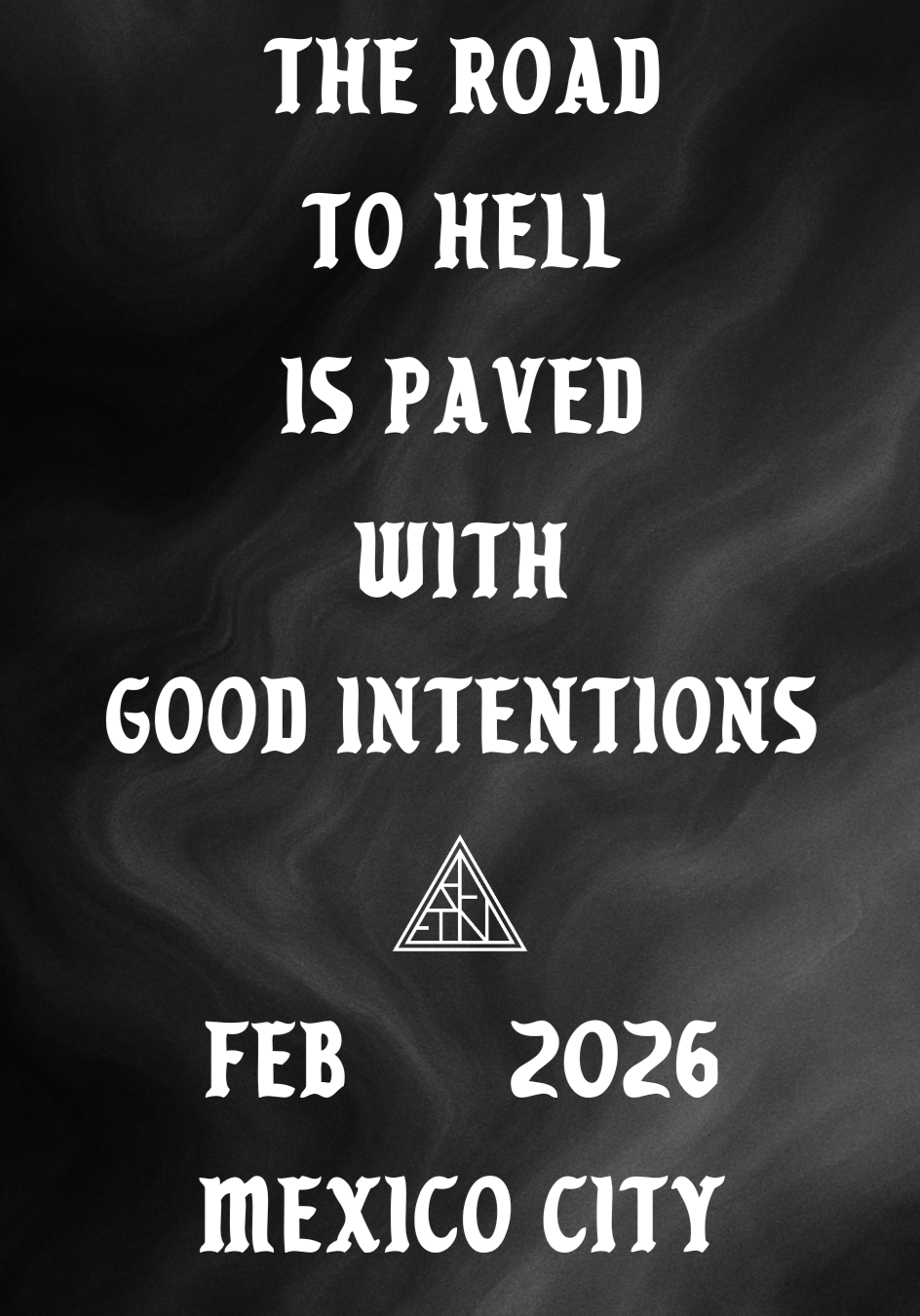
The Road to Hell is Paved with Good Intentions
Adolfo Guerra and Grayson Cassels
On View
Thursday, Feb 5, 2026: 3pm–8pm
Friday, Feb 6, 2026: 12pm–8pm
Saturday, Feb 7, 2026: 12pm–8pm
Sunday, Feb 8, 2026: 11am–7pm
Calle Fresno between Av Flores Magón y Calle Clavel, Santa María la Ribera, CDMX
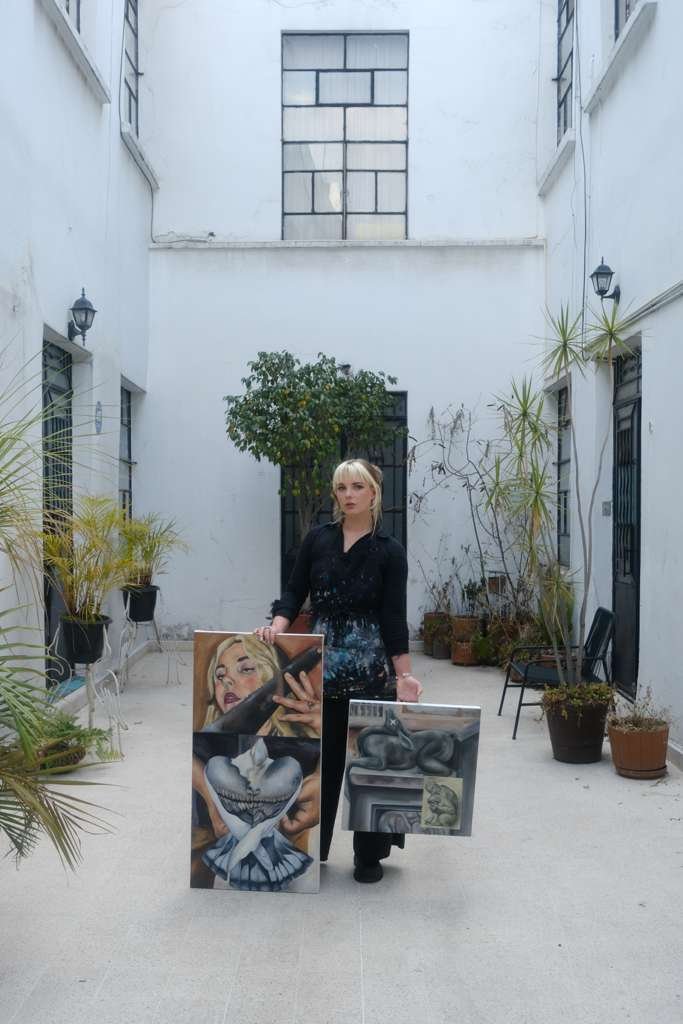
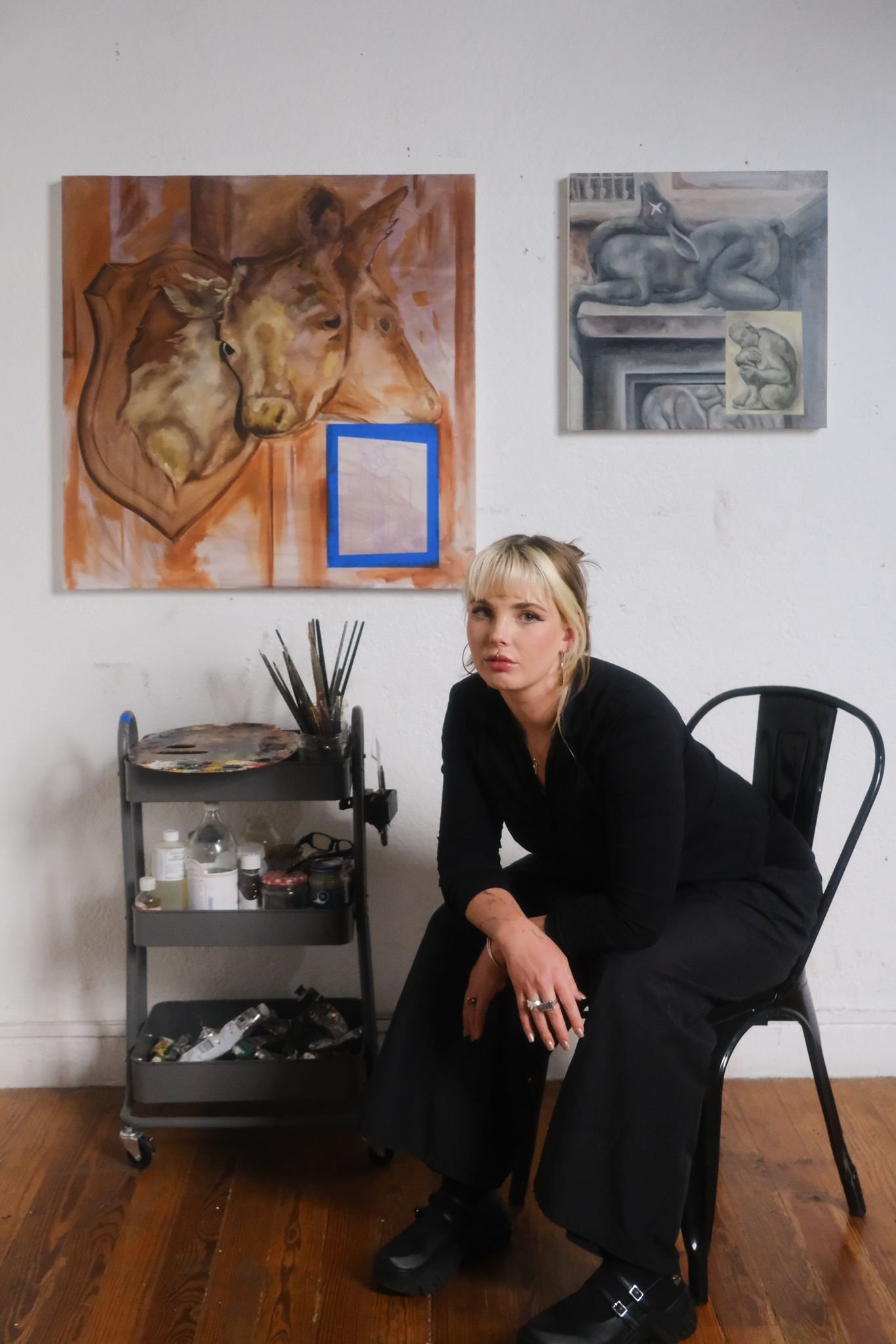
When Rudolf Zwirner was asked about the genesis of KUNSTMARKT (the first contemporary art fair, hosted in Cologne, Germany in 1967) the gallerist stated: “I knew we had to change the structures if we wanted to sell young art”. Taking a page from Zwirner, we too are thinking about how to disrupt the contemporary art fair format. So, instead of showing inside Feria Material, find us outside Feria Material. In moving trucks parked on the street outside Maravilla Studios you will find our next pop-up, The Road to Hell is Paved with Good Intentions, in its most itinerant form: AlentarxMudanzas. The exhibition showcases paintings by Alentar artists Adolfo Guerra and Grayson Cassels.
We were inspired by a gallery in the United States (U-Haul Gallery) that did something similar in 2024 outside The Armory Show in New York, though we diverge somewhat from their motivations (a commentary on the high cost of renting exhibition spaces). Instead, we question—and encourage others to do the same—the following: does the structure of international art fairs still serve its original purpose? Or could it be that, after nearly 60 years, what was once the most avant-garde way of exhibiting contemporary art has become just another privileged institution?
Our intention is not to alienate ourselves from global art fairs, but rather to do something different that might prompt audiences to reflect on Rudolf Zwirner’s original goals when he founded KUNSTMARKT: to create a new structure for selling young and emerging art.
More than offering an alternative exhibition space, the show confronts the economies and social structures that shape art fairs—structures that often reward proximity and established relationships—, while nonetheless taking advantage of the influx of collectors and enthusiasts that descend upon Mexico City during art week.
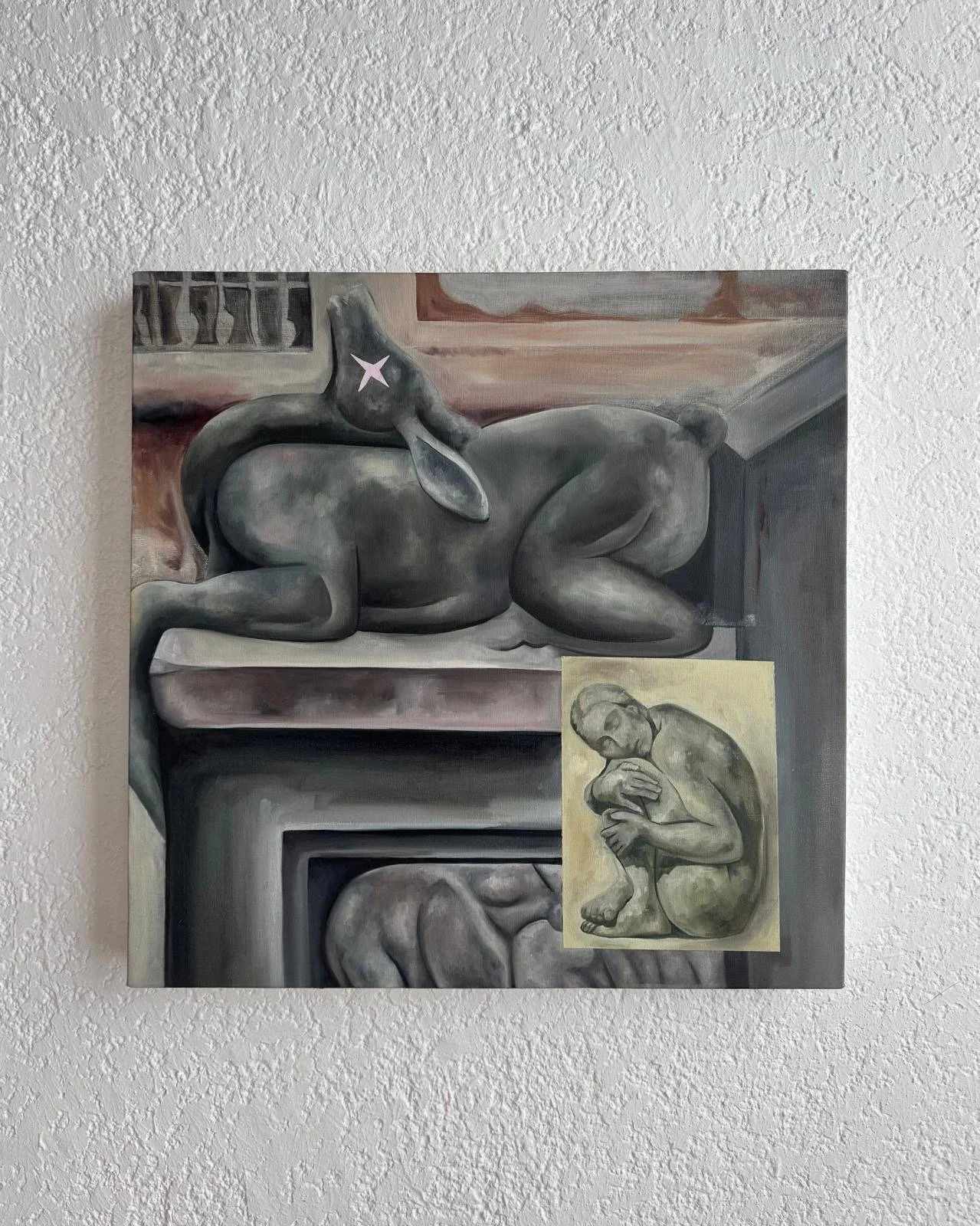
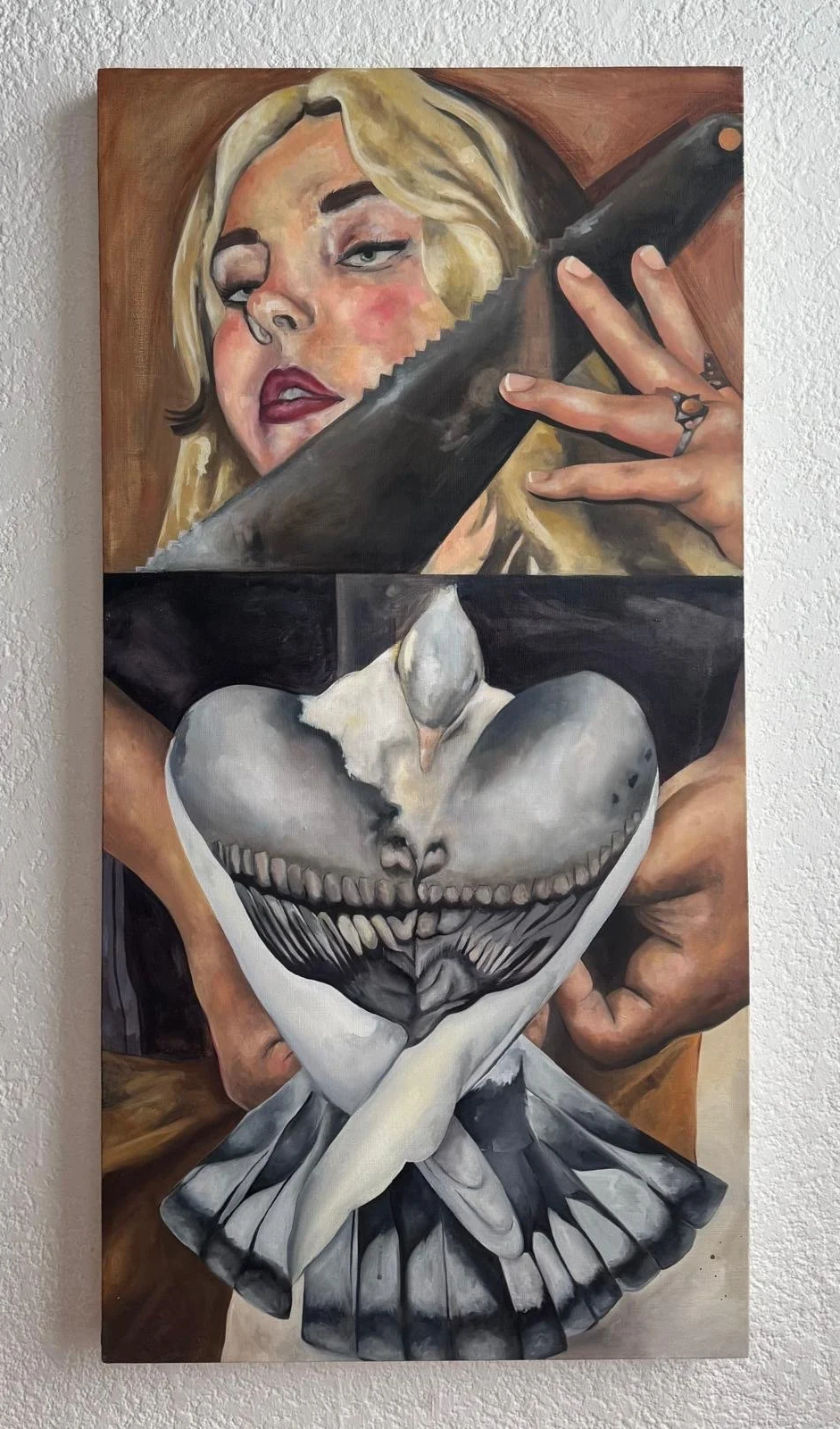
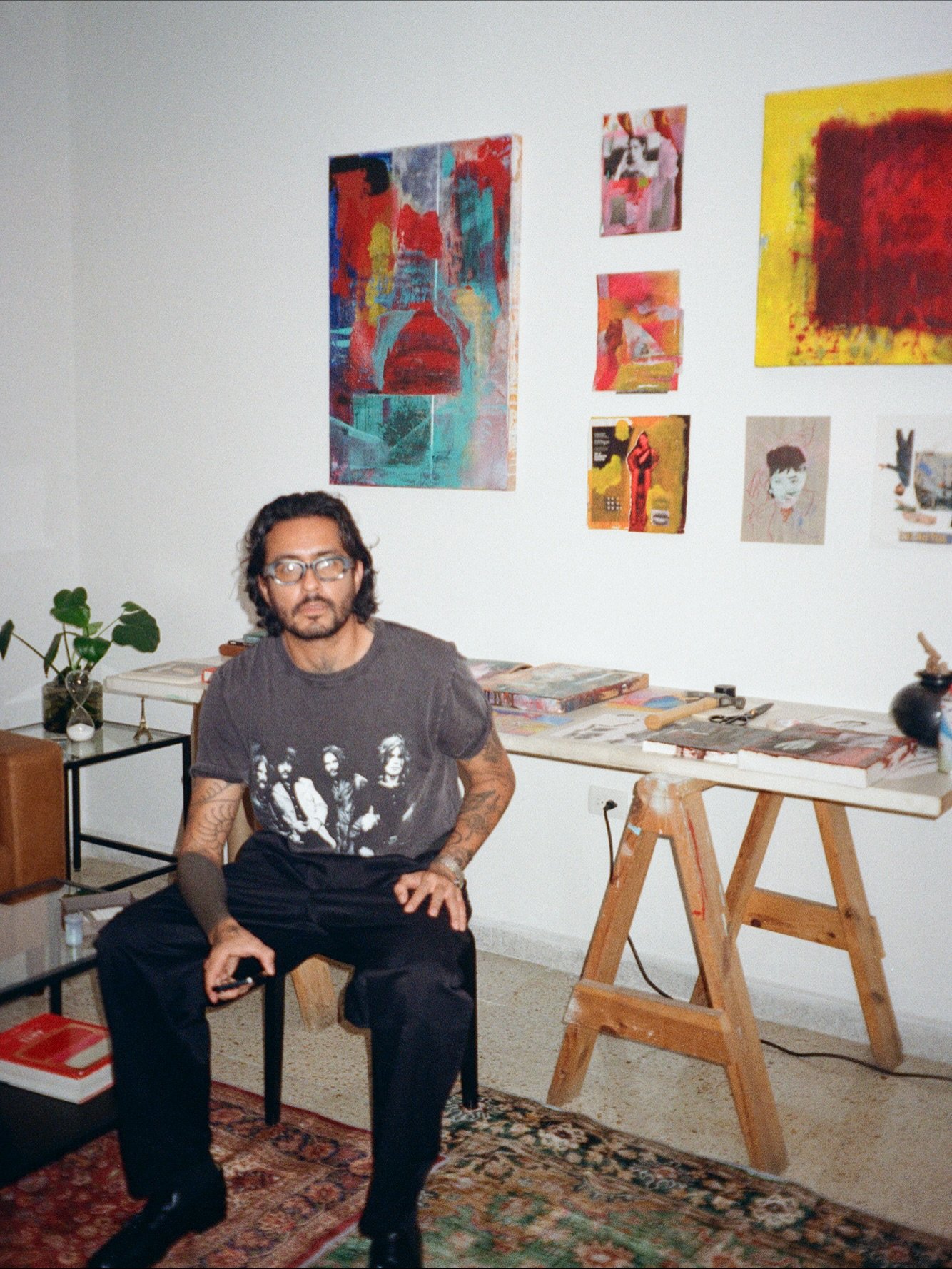
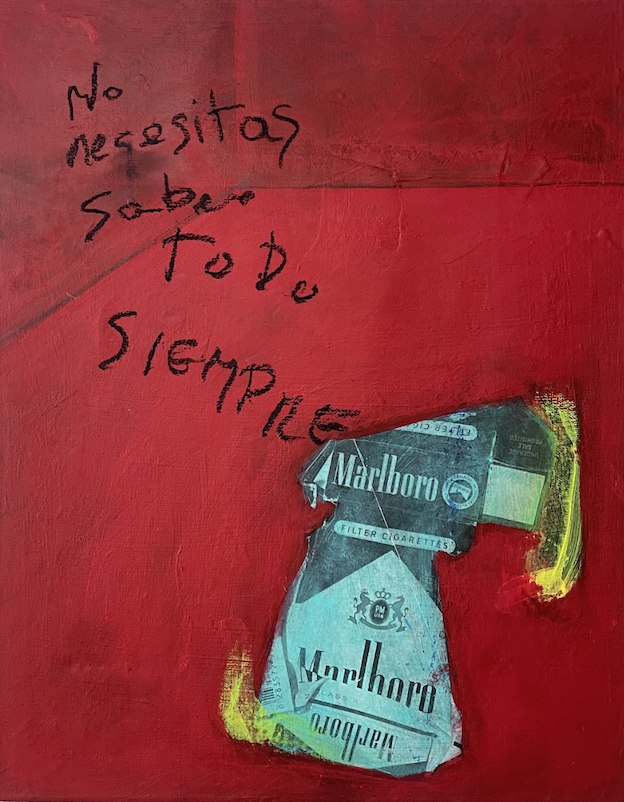
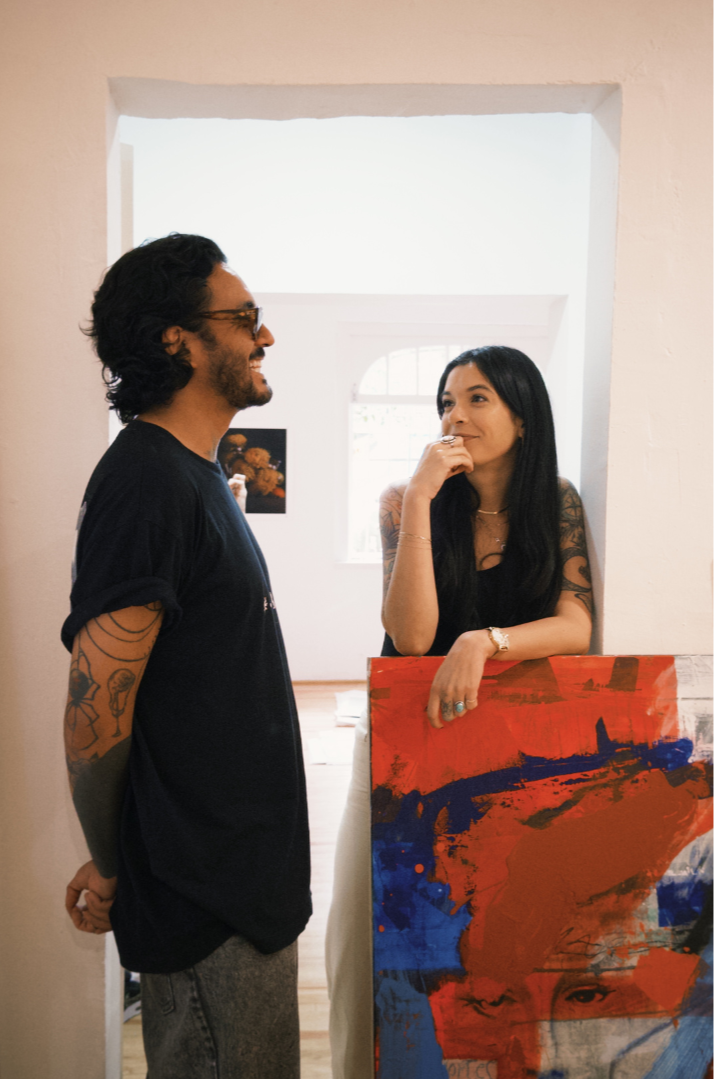
Curatorially speaking, The Road to Hell is Paved with Good Intentions is primarily concerned with subject matter—the body—and medium—paint. The body is understood here, through a Bakhtinian lens, as perpetually in the act of becoming: continually built and re-created. For artists Adolfo Guerra and Grayson Cassels, what constitutes a body is not fixed; it can be mediated by and through—by parasites, by creative impulse, through pigment, through images, through symbols.
The medium (a word that itself suggests a condition of betweenness and a quality of becoming) is paint. Drawing on theories of materiality, paint in these works becomes a living environment of expression, transmission, and storage” marking these artists’ processes of creating bodies. Paint, in this sense, becomes a form of bodily refuse: a material that emanates from the artists’ bodies like blood or saliva, rendering these works as traces of interiority made external.


Cuando se le preguntó a Rudolf Zwirner sobre la génesis de KUNSTMARKT (la primera feria de arte contemporáneo, realizada en Colonia, Alemania, en 1967), el galerista afirmó: “Sabía que teníamos que cambiar las estructuras si queríamos vender arte joven”. Siguiendo el ejemplo de Zwirner, nosotras también estamos pensando en cómo intervenir y desestabilizar el formato contemporáneo de las ferias de arte. Por eso, en lugar de exponer dentro de Feria Material, encuéntrennos fuera de Feria Material. En camiones de mudanza estacionados en la calle frente a Maravilla Studios encontrarán nuestro próximo pop-up, The Road to Hell is Paved with Good Intentions, en su forma más itinerante: AlentarxMudanzas. La exposición presenta pinturas de los artistas de Alentar Adolfo Guerra y Grayson Cassels.
Nos inspiramos en una galería en Estados Unidos (U-Haul Gallery) que realizó una propuesta similar en 2024 frente a The Armory Show en Nueva York, aunque nos distanciamos parcialmente de sus motivaciones (un comentario sobre el alto costo de rentar espacios expositivos). En su lugar, planteamos—y alentamos a que otros también lo hagan—las siguientes preguntas: ¿sigue cumpliendo su función la estructura de las ferias internacionales? ¿O puede ser que, después de casi 60 años, aquello que alguna vez fue la forma más avant-garde de exhibir arte contemporáneo se haya convertido en una institución privilegiada más?
Nuestra intención no es alejarnos de las ferias globales, sino hacer algo distinto que quizá invite al público a reflexionar sobre los objetivos originales de Rudolf Zwirner al fundar KUNSTMARKT: crear una nueva estructura para la venta de arte joven y emergente.
Más que ofrecer un espacio alternativo de exhibición, la muestra confronta las economías y estructuras sociales que configuran las ferias de arte—estructuras que con frecuencia recompensan la cercanía y las relaciones ya establecidas—, al mismo tiempo que aprovecha la afluencia de coleccionistas y entusiastas que llegan a la Ciudad de México durante la semana del arte.
Desde una perspectiva curatorial, The Road to Hell is Paved with Good Intentions se centra principalmente en el tema—el cuerpo—y el medio—la pintura. El cuerpo se entiende aquí, a través de una lente bajtiniana, como algo que está perpetuamente en proceso de devenir: continuamente construido y recreado. Para lxs artistas Adolfo Guerra y Grayson Cassels, lo que constituye un cuerpo no es fijo; puede ser mediado por y a través de—por parásitos, por el impulso creativo, a través del pigmento, de las imágenes, de los símbolos.
El medio (una palabra que en sí misma sugiere una condición de entre-medio y una cualidad de devenir) es la pintura. Retomando teorías de la materialidad, la pintura en estas obras se convierte en un entorno vivo de expresión, transmisión y almacenamiento, marcando los procesos mediante los cuales estos artistas crean cuerpos. En este sentido, la pintura se vuelve una forma de desecho corporal: un material que emana de los cuerpos de lxs artistas como sangre o saliva, convirtiendo estas obras en huellas de una interioridad hecha externa.